Does the Easy Plant LED light have a sunrise or sunset mode?Aquarium plants do not require an exact simulation of the sunrise and sunset to grow well, given that nature often has cloudy days or different seasons. These fancy features are mostly for the humans, rather than for the benefit of the plants. In our experience, we have found that providing the same, consistent lighting for 6–12 hours each day produces amazing plant growth. Therefore, we decided to drop this feature for the Easy Plant LED and focus on achieving our goal of creating the best p...
How long do the sliding brackets on the Easy Plant LED light extend?The Aquarium Co-Op Easy Plant LED is made with expandable brackets, which allows smaller models to be “sized-up” to the next aquarium size. The brackets on each end of the light slide out so that they may fit slightly wider aquariums (for example, going from a 36” wide aquarium to a 48” wide aquarium). The 12-inch light model has the brackets extend 4.5 inches on each end, for a total of 9 inches. For all of the other light models, each sliding bracket extends 7.5 inches on each end, for a to...
Is it bad if the CO2 bubbles from the diffuser are reaching the water surface?No, this is normal. The key is to place your CO2 diffuser as low as possible in the aquarium. When the bubbles are released from the diffuser, they imperceptibly get smaller and smaller as they rise and the CO2 gas is being absorbed into the water. For more information on CO2 systems in high tech planted tanks, read the full article.
How do I add products to my order or combine my orders?Our packing and shipping crew works extremely fast, so once you submit an order, you only have a very short window during warehouse hours to attempt to add a last-minute product. Try contacting our customer service team using our contact form or by emailing shipping@aquariumcoop.com. However, once the order has been packaged, there is no way for us to edit the order at that point and you'll have to submit a new order instead. The good news is that orders submitted after 4 p.m. PST usually...
Does the Easy Plant LED light come with a remote or controller?Yes, there is an in-line controller that is placed 3 feet from the light. It turns on the Daylight and Moonlight modes, and it has up and down arrows to control the brightness setting. See the product page for more details.
How long will the LEDs in the Easy Plant LED light last?The LEDs in the Aquarium Co-Op Easy Plant LED are rated for 50,000 hours of operation. That means if the LEDs are turned on for 8 hours every day, the LEDs on the light would last more than 17 years. See the product page for more details.
CO2 in Planted Aquariums: Pros and Cons to ConsiderIn the planted tank hobby, you may have heard of two types of aquariums: high tech tanks that inject carbon dioxide (CO2) gas and low tech tanks that do not. CO2 gas is often touted as the magic key for causing plants to grow insanely fast and algae to disappear without a trace. Let’s talk about what CO2 actually does for aquarium plants, as well as some of the pros and cons of using it. CO2 is Used for Photosynthesis Have you ever heard the saying “carbon is the backbone of life”? That phras...
Care Guide for Hillstream Loaches – The Oddball Algae EaterReticulated hillstream loaches (Sewellia lineolata) are one of the coolest-looking algae eaters, but there’s a lot of conflicting information about their care requirements that makes people hesitant to try them. After more than a decade of owning, selling, and breeding them, this article shares our personal experiences on how to successfully keep this amazing species. What are Reticulated Hillstream Loaches? There are many types of hillstream loaches that live in similar environments, but let...
How to Use an Egg Tumbler to Hatch Aquarium Fish EggsHave you ever tried raising baby fish (called fry)? For many African cichlid and catfish species, using an egg tumbler to raise eggs into fry can give you a better success rate. The purpose of an egg tumbler is to help water circulate over and around the fish eggs. The gentle movement created by an egg tumbler will help provide an oxygen-rich environment for the eggs and also help prevent fungus from developing on the eggs. The Ziss Egg Tumbler is a very easy-to-use device that was designed t...
What does water conditioner do?The main purpose of water conditioners is to break down chlorine and chloramine and make water safe for fish to inhabit. Almost all dechlorinators contain sodium thiosulfate, which reacts to chlorine and chloramine to form harmless byproducts. Sodium thiosulfate looks like rock salt or white powder, and it is often dissolved in water to create liquid dechlorinators. Some water conditioners contain pH buffers, aloe vera to help heal the fish’s slime coats, or extra additives. The Aquarium Co-...
What size CO2 cylinder should I get for my planted aquarium?If you are running a high tech planted aquarium injected with high amounts of CO2, people recommend getting the largest size possible so you will not have to refill the cylinder as frequently. However, for the average customer, we often suggest: 2.5–5 lb. cylinder for 20-gallon aquariums or smaller 5 lb. cylinder for 25- to 40-gallon aquariums 10 lb. cylinder for 55-gallon aquariums or larger If you plan on using one regulator with five or six aquariums, then scale the CO2 cylinder size ac...
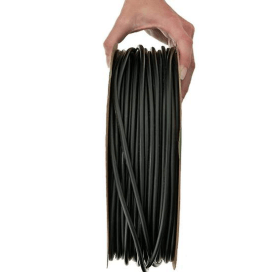
Do I need to use special CO2 proof tubing or CO2 resistant tubing with my CO2 system?We use the Aquarium Co-Op airline tubing (i.e., a flexible, black tubing made from food-grade PVC) on all of our aquariums and have not detected any perceptible loss of CO2. In our experience, special CO2 tubing is more expensive, harder to bend, and not as readily available. For more information on CO2 systems in high tech planted tanks, read the full article.
What is the difference between a single-stage vs. two-stage regulator?A single-stage regulator reduces the cylinder’s gas pressure in one step, whereas a two-stage regulator reduces the pressure in two steps, resulting in a more stable and reliable flow of CO2. A two-stage regulator also helps to prevent “end-of-tank dumps,” in which a nearly empty CO2 cylinder may dump out the rest of its gas in one go. For more information, see our full article on CO2 systems for high tech planted tanks.
Will dechlorinator remove bleach?Yes, water conditioners like Easy Dechlorinator will react to the chlorine in bleach to neutralize it more quickly. The amount of dechlorinator needed depends on the amount and concentration of bleach used. As a starting point, see the directions for neutralizing Purigen chemical filtration media after it has been soaking in a bleach solution. For more information, read the full article on dechlorinators.
How to Slow the Flow in Your AquariumPreviously, we discussed the importance of filtration for fish tanks because it cleans up debris particles, grows beneficial bacteria, and helps create water movement and surface agitation for improved oxygenation. However, is it possible your aquarium filter is overly powerful and produces current that is too strong for your fish? Some fish have long and flowy fins, are small in size, or originated from slow-moving waterways and aren’t built to handle torrents of water. Perpetually fighting ...
Why doesn't Aqua Huna sell to customers in Washington state?Since Aquarium Co-Op does not sell live animals online, we have partnered with Aqua Huna as one of our preferred live fish vendors and receive a commission from them if you use our affiliate discount code "aquariumcoop" to save 5% on checkout. On the Frequently Asked Questions section of Aqua Huna's website, they state, "While we are based out of Washington, we are primarily a fish and shrimp wholesaler to local small businesses, and we will not compete with our wholesale cust...


 CO2 in Planted Aquariums: Pros and Cons to Consider
In the planted tank hobby, you may have heard of two types of aquariums: high tech tanks that inject carbon dioxide (CO2) gas and low tech tanks that do not. CO2 gas is often touted as the magic key for causing plants to grow insanely fast and algae to disappear without a trace. Let’s talk about what CO2 actually does for aquarium plants, as well as some of the pros and cons of using it. CO2 is Used for Photosynthesis Have you ever heard the saying “carbon is the backbone of life”? That phras...
CO2 in Planted Aquariums: Pros and Cons to Consider
In the planted tank hobby, you may have heard of two types of aquariums: high tech tanks that inject carbon dioxide (CO2) gas and low tech tanks that do not. CO2 gas is often touted as the magic key for causing plants to grow insanely fast and algae to disappear without a trace. Let’s talk about what CO2 actually does for aquarium plants, as well as some of the pros and cons of using it. CO2 is Used for Photosynthesis Have you ever heard the saying “carbon is the backbone of life”? That phras...
 Care Guide for Hillstream Loaches – The Oddball Algae Eater
Reticulated hillstream loaches (Sewellia lineolata) are one of the coolest-looking algae eaters, but there’s a lot of conflicting information about their care requirements that makes people hesitant to try them. After more than a decade of owning, selling, and breeding them, this article shares our personal experiences on how to successfully keep this amazing species. What are Reticulated Hillstream Loaches? There are many types of hillstream loaches that live in similar environments, but let...
Care Guide for Hillstream Loaches – The Oddball Algae Eater
Reticulated hillstream loaches (Sewellia lineolata) are one of the coolest-looking algae eaters, but there’s a lot of conflicting information about their care requirements that makes people hesitant to try them. After more than a decade of owning, selling, and breeding them, this article shares our personal experiences on how to successfully keep this amazing species. What are Reticulated Hillstream Loaches? There are many types of hillstream loaches that live in similar environments, but let...
 How to Use an Egg Tumbler to Hatch Aquarium Fish Eggs
Have you ever tried raising baby fish (called fry)? For many African cichlid and catfish species, using an egg tumbler to raise eggs into fry can give you a better success rate. The purpose of an egg tumbler is to help water circulate over and around the fish eggs. The gentle movement created by an egg tumbler will help provide an oxygen-rich environment for the eggs and also help prevent fungus from developing on the eggs. The Ziss Egg Tumbler is a very easy-to-use device that was designed t...
How to Use an Egg Tumbler to Hatch Aquarium Fish Eggs
Have you ever tried raising baby fish (called fry)? For many African cichlid and catfish species, using an egg tumbler to raise eggs into fry can give you a better success rate. The purpose of an egg tumbler is to help water circulate over and around the fish eggs. The gentle movement created by an egg tumbler will help provide an oxygen-rich environment for the eggs and also help prevent fungus from developing on the eggs. The Ziss Egg Tumbler is a very easy-to-use device that was designed t...
 How to Slow the Flow in Your Aquarium
Previously, we discussed the importance of filtration for fish tanks because it cleans up debris particles, grows beneficial bacteria, and helps create water movement and surface agitation for improved oxygenation. However, is it possible your aquarium filter is overly powerful and produces current that is too strong for your fish? Some fish have long and flowy fins, are small in size, or originated from slow-moving waterways and aren’t built to handle torrents of water. Perpetually fighting ...
How to Slow the Flow in Your Aquarium
Previously, we discussed the importance of filtration for fish tanks because it cleans up debris particles, grows beneficial bacteria, and helps create water movement and surface agitation for improved oxygenation. However, is it possible your aquarium filter is overly powerful and produces current that is too strong for your fish? Some fish have long and flowy fins, are small in size, or originated from slow-moving waterways and aren’t built to handle torrents of water. Perpetually fighting ...


