5 Best Aquarium Plants for High Tech Planted Tanks with CO2Have you ever heard the words “low tech” and “high tech” being used when referring to a planted aquarium and wondered what the difference was? To put it simply, the more energy that goes into an aquarium setup, the “higher tech” it is. A high tech planted tank may use intensely bright lighting, a pressurized carbon dioxide (CO2) gas system, and large amounts of fertilizer. Because a lot of energy is going into the system, high tech setups are often very costly and need more maintenance than a...
How do I clean a CO2 diffuser if it becomes clogged?Diffusers must be cleaned or replaced at some point because of algae buildup. Because diffusers can be made of different materials, follow the manufacturer’s cleaning instructions to use diluted bleach, vinegar, or other methods. For the Aquario Neo CO2 Diffuser, we clean it with the following steps: Make a solution of 50% water and 50% bleach inside of a cup so that there's enough liquid to cover the diffuser's brown ceramic disk. While the CO2 is still running and connected to the ...
Is CO2 gas dangerous for aquarium fish?It can be harmful for animals in large enough quantities if (1) CO2 causes the water pH to drop too quickly or (2) people try to be so efficient with the CO2 that they end up cutting off the oxygen that fish need to breathe. In the latter case, some hobbyists try to minimize surface agitation so that less gas exchange occurs and less CO2 escapes the water. However, less gas exchange also means less oxygen will enter the water, which can cause your fish to struggle and gasp for air. Our recomm...
Does CO2 get rid of algae?It’s a common belief that CO2 automatically fixes algae problems, but this is not true. A healthy planted tank must have three components in balance — lighting, fertilizer, and carbon dioxide. CO2 is just one of the primary nutrients that plants need to grow. Many beginners use too much light and fertilizer, so adding CO2 can help balance the aquarium. However, if a tank has high lighting and CO2 injection but, for example, too little fertilizer, then algae will appear because of the imbalanc...
Do I need a check valve for my CO2 system?Check valves are used to prevent water from flowing out of the aquarium and pouring all over the regulator when it is turned off. The bubble counter on some regulators already come with a built-in check valve, but you can install a second one as backup if desired. We have personally used the regular plastic check valves with CO2 systems at our fish store, warehouse, and homes, and they have not broken down. That being said, CO2 does degrade plastic after a very long time, so we also offer a s...
When should I turn on and off the CO2 in my aquarium?Plants use CO2 when there is light to photosynthesize. However, the process reverses at night and becomes the respiration cycle, in which plants consume oxygen and sugars and release CO2. Therefore, we want to shut off the CO2 regulator when the aquarium light is off. For more optimized CO2 usage, program the regulator’s timer to turn on 1–2 hours before the light comes on and turn off 1 hour before the light shuts off. (If you only have one timer, you can use the same timer with a power stri...
Where can I buy a CO2 cylinder for my planted aquarium?We like to get ours from local home brewing supply stores and welding supply stores. Usually, they also offer CO2 refill services if you bring back your cylinder when it’s empty. For more information on CO2 systems in high tech planted tanks, read the full article.
Should I use a DIY CO2 or pressurized CO2 system?We have tested many types of DIY systems using yeast, citric acid, and other mixtures, and while they may be cheaper, they are not as stable as a pressurized CO2 system using a regulator and cylinder. The DIY reactions often make lots of CO2 at the beginning and then decline over time, and the inconsistent amounts of CO2 can make it difficult to balance a planted tank. Furthermore, the pressure is not as high, temperature can affect the reaction, and the overall process is time-consuming to m...
How to Set Up an Aquarium CO2 System the Easy WayWhen it comes to planted tanks, we always encourage beginners to start with easy, slow-growing plants that only need low lighting and an all-in-one fertilizer. However, certain plants are a little more difficult to grow underwater and may require high lighting and extra carbon dioxide (CO2) beyond what is naturally provided in the air. When it comes to injecting CO2 gas into water, aquarists have tried all kinds of techniques, types of equipment, schedules, and dosage amounts to put together ...
Do all aquarium plants need CO2 injection?All aquatic plants need CO2 as one of their basic building blocks to survive and grow. However, some types like cryptocoryne plants are fine with the normal amounts of dissolved CO2 found in aquarium water and do not need extra CO2, while other plants like scarlet temple could benefit from CO2 injection but don’t require it. A third category of plants — which includes Blyxa japonica, dwarf hairgrass, and dwarf baby tears and other similar carpeting plants — has higher demands and necessitates...
Is it bad if the CO2 bubbles from the diffuser are reaching the water surface?No, this is normal. The key is to place your CO2 diffuser as low as possible in the aquarium. When the bubbles are released from the diffuser, they imperceptibly get smaller and smaller as they rise and the CO2 gas is being absorbed into the water. For more information on CO2 systems in high tech planted tanks, read the full article.
CO2 in Planted Aquariums: Pros and Cons to ConsiderIn the planted tank hobby, you may have heard of two types of aquariums: high tech tanks that inject carbon dioxide (CO2) gas and low tech tanks that do not. CO2 gas is often touted as the magic key for causing plants to grow insanely fast and algae to disappear without a trace. Let’s talk about what CO2 actually does for aquarium plants, as well as some of the pros and cons of using it. CO2 is Used for Photosynthesis Have you ever heard the saying “carbon is the backbone of life”? That phras...
What size CO2 cylinder should I get for my planted aquarium?If you are running a high tech planted aquarium injected with high amounts of CO2, people recommend getting the largest size possible so you will not have to refill the cylinder as frequently. However, for the average customer, we often suggest: 2.5–5 lb. cylinder for 20-gallon aquariums or smaller 5 lb. cylinder for 25- to 40-gallon aquariums 10 lb. cylinder for 55-gallon aquariums or larger If you plan on using one regulator with five or six aquariums, then scale the CO2 cylinder size ac...
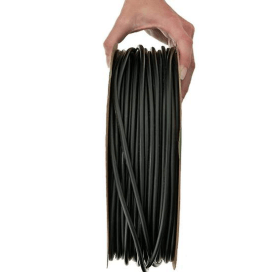
Do I need to use special CO2 proof tubing or CO2 resistant tubing with my CO2 system?We use the Aquarium Co-Op airline tubing (i.e., a flexible, black tubing made from food-grade PVC) on all of our aquariums and have not detected any perceptible loss of CO2. In our experience, special CO2 tubing is more expensive, harder to bend, and not as readily available. For more information on CO2 systems in high tech planted tanks, read the full article.
Marimo Moss Balls – The World’s Easiest Aquarium “Plant”Do you lack a green thumb when it comes to keeping live aquarium plants? Or maybe you want to add a touch of nature to your betta fish tank without a lot of effort? Let me introduce you to the marimo moss ball. This velvety green orb is neither a moss nor plant, but a species of green algae known as Aegagropila linnaei that gets its unique shape from tumbling about the bottom of freshwater lakes. The nickname “marimo” roughly translates from Japanese as “water plant that’s kind of like a boun...
7 Reasons Why Your Aquarium Water Has Bubbles or FoamingHave you ever seen bubbles or foam in your aquarium water and wondered if it’s safe for your fish? Bubbles can happen for many reasons — some of them good and some of them bad — so let’s talk about what to watch out for and how to fix the problem if needed. 1. Normal Bubbles from an Air Pump Of course, the most obvious reason for bubbles is that you are using an air pump that sucks in air from outside of the aquarium, pushes it through airline tubing, and pumps it into the water. Typically, t...
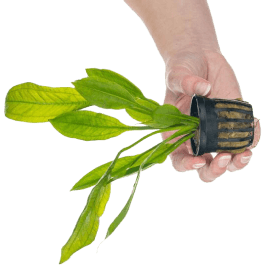



 5 Best Aquarium Plants for High Tech Planted Tanks with CO2
Have you ever heard the words “low tech” and “high tech” being used when referring to a planted aquarium and wondered what the difference was? To put it simply, the more energy that goes into an aquarium setup, the “higher tech” it is. A high tech planted tank may use intensely bright lighting, a pressurized carbon dioxide (CO2) gas system, and large amounts of fertilizer. Because a lot of energy is going into the system, high tech setups are often very costly and need more maintenance than a...
5 Best Aquarium Plants for High Tech Planted Tanks with CO2
Have you ever heard the words “low tech” and “high tech” being used when referring to a planted aquarium and wondered what the difference was? To put it simply, the more energy that goes into an aquarium setup, the “higher tech” it is. A high tech planted tank may use intensely bright lighting, a pressurized carbon dioxide (CO2) gas system, and large amounts of fertilizer. Because a lot of energy is going into the system, high tech setups are often very costly and need more maintenance than a...
 How to Set Up an Aquarium CO2 System the Easy Way
When it comes to planted tanks, we always encourage beginners to start with easy, slow-growing plants that only need low lighting and an all-in-one fertilizer. However, certain plants are a little more difficult to grow underwater and may require high lighting and extra carbon dioxide (CO2) beyond what is naturally provided in the air. When it comes to injecting CO2 gas into water, aquarists have tried all kinds of techniques, types of equipment, schedules, and dosage amounts to put together ...
How to Set Up an Aquarium CO2 System the Easy Way
When it comes to planted tanks, we always encourage beginners to start with easy, slow-growing plants that only need low lighting and an all-in-one fertilizer. However, certain plants are a little more difficult to grow underwater and may require high lighting and extra carbon dioxide (CO2) beyond what is naturally provided in the air. When it comes to injecting CO2 gas into water, aquarists have tried all kinds of techniques, types of equipment, schedules, and dosage amounts to put together ...
 CO2 in Planted Aquariums: Pros and Cons to Consider
In the planted tank hobby, you may have heard of two types of aquariums: high tech tanks that inject carbon dioxide (CO2) gas and low tech tanks that do not. CO2 gas is often touted as the magic key for causing plants to grow insanely fast and algae to disappear without a trace. Let’s talk about what CO2 actually does for aquarium plants, as well as some of the pros and cons of using it. CO2 is Used for Photosynthesis Have you ever heard the saying “carbon is the backbone of life”? That phras...
CO2 in Planted Aquariums: Pros and Cons to Consider
In the planted tank hobby, you may have heard of two types of aquariums: high tech tanks that inject carbon dioxide (CO2) gas and low tech tanks that do not. CO2 gas is often touted as the magic key for causing plants to grow insanely fast and algae to disappear without a trace. Let’s talk about what CO2 actually does for aquarium plants, as well as some of the pros and cons of using it. CO2 is Used for Photosynthesis Have you ever heard the saying “carbon is the backbone of life”? That phras...
 Marimo Moss Balls – The World’s Easiest Aquarium “Plant”
Do you lack a green thumb when it comes to keeping live aquarium plants? Or maybe you want to add a touch of nature to your betta fish tank without a lot of effort? Let me introduce you to the marimo moss ball. This velvety green orb is neither a moss nor plant, but a species of green algae known as Aegagropila linnaei that gets its unique shape from tumbling about the bottom of freshwater lakes. The nickname “marimo” roughly translates from Japanese as “water plant that’s kind of like a boun...
Marimo Moss Balls – The World’s Easiest Aquarium “Plant”
Do you lack a green thumb when it comes to keeping live aquarium plants? Or maybe you want to add a touch of nature to your betta fish tank without a lot of effort? Let me introduce you to the marimo moss ball. This velvety green orb is neither a moss nor plant, but a species of green algae known as Aegagropila linnaei that gets its unique shape from tumbling about the bottom of freshwater lakes. The nickname “marimo” roughly translates from Japanese as “water plant that’s kind of like a boun...
 7 Reasons Why Your Aquarium Water Has Bubbles or Foaming
Have you ever seen bubbles or foam in your aquarium water and wondered if it’s safe for your fish? Bubbles can happen for many reasons — some of them good and some of them bad — so let’s talk about what to watch out for and how to fix the problem if needed. 1. Normal Bubbles from an Air Pump Of course, the most obvious reason for bubbles is that you are using an air pump that sucks in air from outside of the aquarium, pushes it through airline tubing, and pumps it into the water. Typically, t...
7 Reasons Why Your Aquarium Water Has Bubbles or Foaming
Have you ever seen bubbles or foam in your aquarium water and wondered if it’s safe for your fish? Bubbles can happen for many reasons — some of them good and some of them bad — so let’s talk about what to watch out for and how to fix the problem if needed. 1. Normal Bubbles from an Air Pump Of course, the most obvious reason for bubbles is that you are using an air pump that sucks in air from outside of the aquarium, pushes it through airline tubing, and pumps it into the water. Typically, t...


